23,00 € (EUR) VAT included
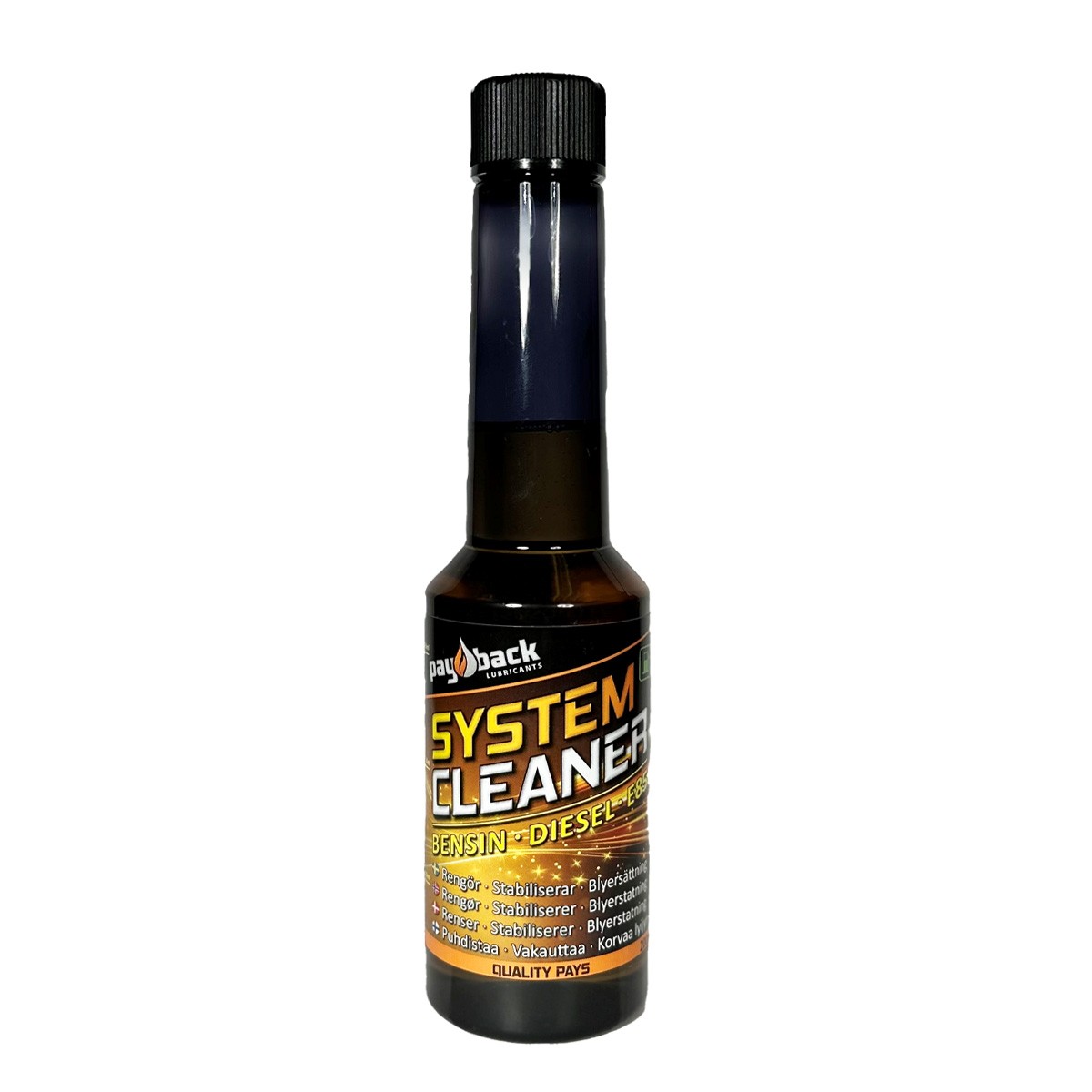
System Cleaner is highly effective for all types of fuel. Quickly and efficiently cleans the entire fuel system in all types of petrol, diesel and ethanol engines. Stabilizes all types of fuel and prevents oxidation, precipitation and corrosion in fuel systems during storage. Powerful lead substitute for vehicles manufactured before 1980.
HIGH PRECISION
Modern fuel injection systems are engineered with high precision to ensure optimized combustion and maximum engine performance. Even small amounts of deposits in the fuel system can affect performance and fuel consumption, eventually leading to wear and operational problems.
A MECHANIC IN A BOTTLE
System Cleaner effectively dissolves deposits, oxidation residues and combustion by-products from all types of fuels in tanks, hoses, pumps, fuel injectors, carburetors, valves, nozzles, combustion chambers and piston crowns. It eliminates operational problems and helps restore full engine power.
PROTECTS THE FUEL SYSTEM
Provides powerful protection against wear, corrosion and oxidation for fuel injectors, fuel pumps and cylinders when used with diesel, petrol, ethanol (E85) and all types of racing fuels.
FUEL PRESERVATION DURING STORAGE
System Cleaner also acts as a fuel stabilizer, preventing fuel degradation, precipitation and oxidation. This helps protect the entire fuel system during extended periods of storage.
EMULSIFIES WATER
During use, condensation water in the fuel tank mixes with the fuel and is subsequently eliminated through combustion, helping to prevent corrosion and ice formation.
ADDITIONAL BENEFITS FOR E5 / E10 / E85
BENEFITS
DOSAGE
Fuel System Cleaning:
200 ml per 50–80 litres of fuel.
Fuel Stabilization During Storage:
200 ml per 50–80 litres of fuel.
Maintenance:
100 ml per 50–80 litres of fuel. Use every 4–6 tankfuls to maintain effectiveness.
Lead Replacement:
200 ml per 250 litres of petrol.